The Eiffel Tower is the most recognizable symbol of Paris and one of the most famous landmarks in the world. Rising 330 meters above the Seine, its iron lattice silhouette defines the city’s skyline and attracts nearly 7 million visitors each year. What was once a controversial project is today celebrated as a masterpiece of engineering and an enduring emblem of French creativity and ambition.



The tower’s story began in 1889, when engineer Gustave Eiffel designed it for the Exposition Universelle (World’s Fair), marking the 100th anniversary of the French Revolution. At the time, critics called it an eyesore, “a tragic streetlamp” and “a monstrous skeleton.” Yet Eiffel defended his vision, emphasizing both its structural elegance and technical innovation. Constructed in just over two years by 300 workers, the tower was the tallest structure in the world until 1930. What began as a temporary exhibition piece was spared demolition and instead became the beloved heart of Paris.
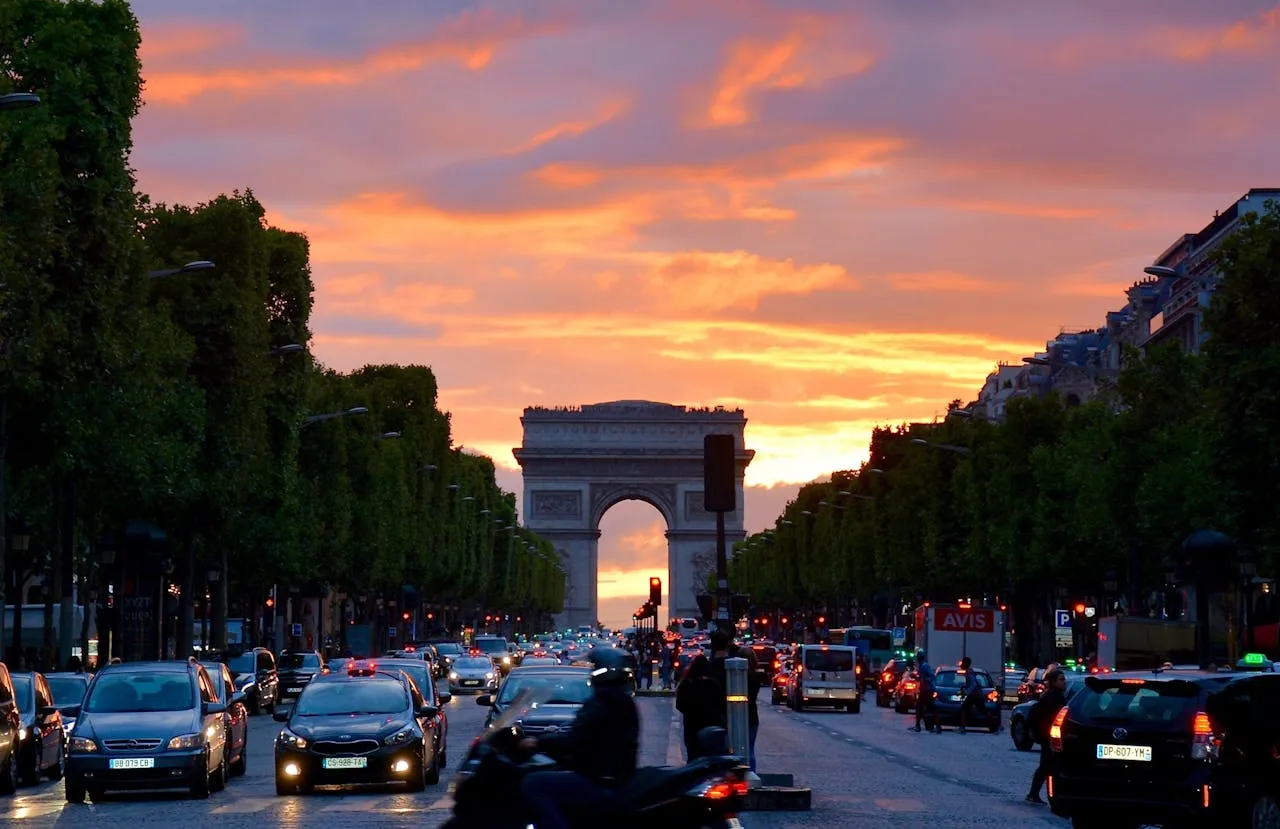
The Eiffel Tower is made of over 18,000 pieces of wrought iron and weighs 10,100 tons, held together by 2.5 million rivets. Its three viewing levels offer breathtaking panoramas of Paris: from the Sacré-Cœur in Montmartre to the golden dome of Les Invalides, from the Arc de Triomphe to the winding Seine. At night, the tower glitters with 20,000 sparkling lights, a spectacle that has enchanted generations of visitors since 1985.
Beyond its beauty, the Eiffel Tower has served scientific and symbolic purposes. Gustave Eiffel himself set up meteorological and aerodynamic experiments in the tower’s upper levels, and later, it became a key site for early radio transmission. During both World Wars, the tower stood proudly as a symbol of Parisian resilience, famously keeping its lights off during the German occupation but never bowing to destruction.
Today, the Eiffel Tower is more than a monument — it is a cultural stage. From fireworks displays on Bastille Day to marriage proposals beneath its beams, it has become a place of memory and celebration. Its restaurants, shops, and exhibitions draw millions, but its magic lies in the awe of standing beneath its arches, gazing up at an achievement that was once thought impossible.
Why You Should Visit
- To admire the most iconic monument in Paris.
- To experience panoramic views of the city from multiple levels.
- To witness the tower sparkle with 20,000 lights at night.
- To walk beneath one of the greatest engineering feats of the 19th century.
Practical Information
Tickets & Entry
- Lift tickets: €11.80 (2nd floor), €18.10 (summit).
- Stairs to 2nd floor: €7.60.
- Free for children under 4.
- Online booking is strongly recommended.
Opening Hours
- Daily: 9:30 – 23:45 (summer: until 00:45).
- Closed only for exceptional maintenance or events.
Best Time to Visit
- Early Morning: Shorter lines, softer light.
- Sunset: Magical views as the city lights come alive.
- Evening: Watch the tower sparkle on the hour (after dusk, 5 minutes).
- Off-season (Nov–Mar): Fewer crowds, though evenings can be chilly.
Getting There
- Metro: Bir-Hakeim (Line 6), Trocadéro (Lines 6, 9), École Militaire (Line 8).
- RER: Champ de Mars – Tour Eiffel (Line C).
- Bus: Lines 42, 69, 82, 87.
- Walking: Easily accessible from the Seine and Champ de Mars park.
Insider Tips
- Book tickets online weeks in advance to skip queues.
- Take the stairs to the 2nd floor for a unique perspective and fewer crowds.
- Best photo spots: Trocadéro (for panoramic shots) and Champ de Mars (for close-ups).
- Stay until evening to catch the sparkling light show.
- Allow at least 2–3 hours for the visit, more if dining at the tower’s restaurants.
Quick Facts
- Completed: 1889 for the World’s Fair.
- Designer: Gustave Eiffel.
- Height: 330 meters (tallest structure in the world until 1930).
- Material: 18,038 iron pieces, 2.5 million rivets.
- Visitors: ~7 million annually.
- Nickname: “La Dame de Fer” — the Iron Lady.
Final Thoughts
The Eiffel Tower is not only Paris’s most visited landmark but also a universal symbol of innovation, resilience, and beauty. From its controversial beginnings to its role as the city’s shining beacon, it embodies the spirit of Paris itself — bold, elegant, and timeless. Whether you climb its steps, dine in its restaurants, or simply admire it from afar, the Eiffel Tower is an experience that never fades. To stand beneath its iron arches is to witness history, engineering, and romance all in one moment.