

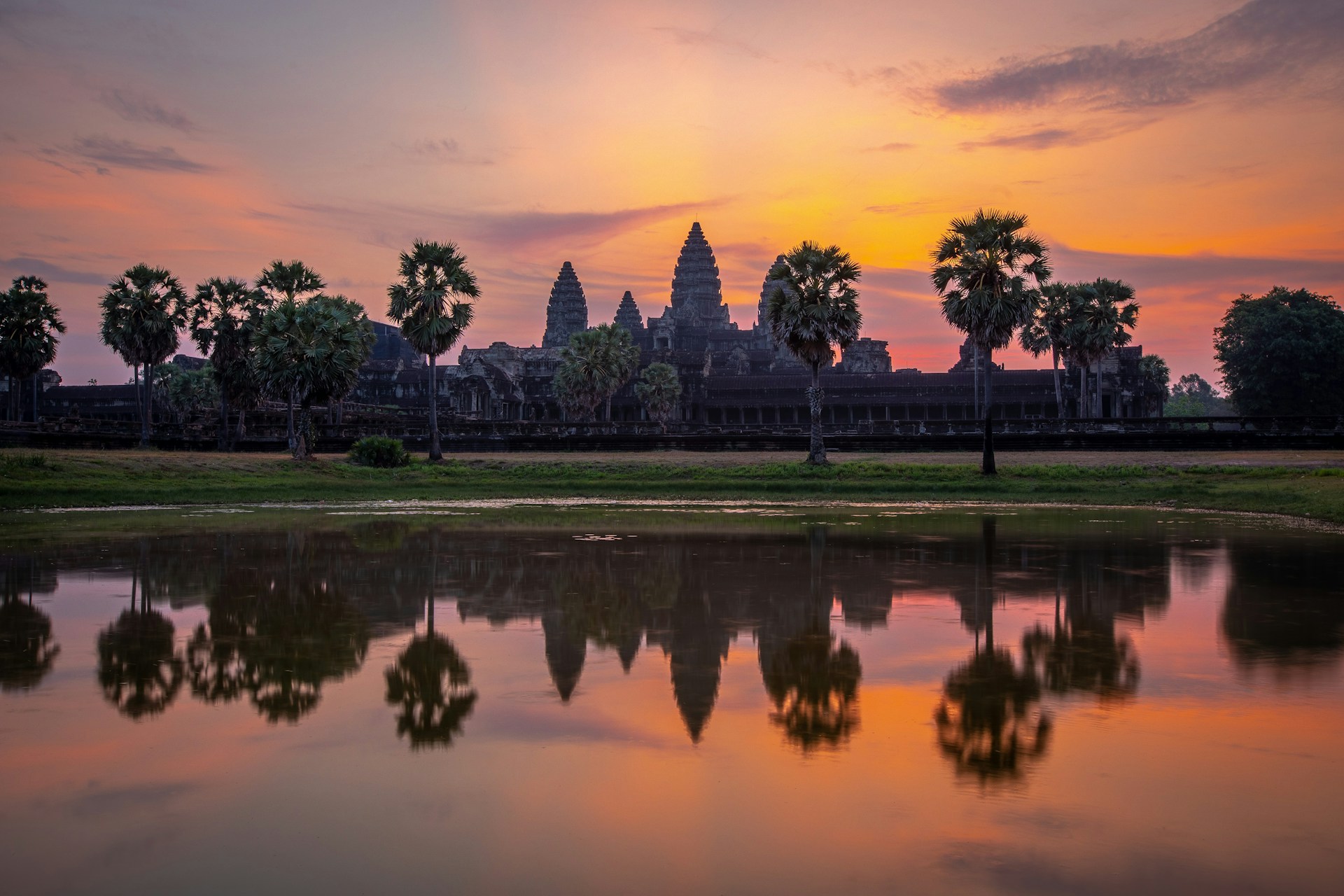
Angkor at dawn in the dry season feels quieter and more intimate, revealing a side of the temples most travelers never experience.
Most people imagine Angkor Wat as a place of crowds and heat—packed walkways, raised phones, and a steady flow of tour groups.
Arrive at dawn during the dry season, and that image quietly falls apart.
For a brief window each morning, Angkor feels restrained. Personal. Almost private.
The Day Starts Before the Noise
The most important moment happens before the sun fully rises.
In the early light, footsteps sound louder than voices. The stone holds the night’s cool air. There’s no urgency yet—no sense that you’re behind schedule or missing something.
This isn’t about beating crowds for a photo. It’s about meeting the place before it wakes up.
Dry Season Changes the Rhythm
The dry season doesn’t just bring better weather—it changes how Angkor behaves.
Paths are easier. Distances feel shorter. You move without constantly seeking shade or shelter. The temples don’t demand endurance; they allow attention.
Instead of managing discomfort, you notice details:
- carvings softened by centuries
- moss catching the first light
- spaces designed for silence, not spectacle
Scale Becomes Understandable
Angkor is vast, but in the early hours it stops feeling overwhelming.
Without constant movement around you, the size of the place becomes readable. You understand how long corridors stretch, how courtyards open and close, how the complex was meant to be experienced gradually—not rushed.
History feels less like information and more like presence.
You Don’t Need to See Everything
This is where many travelers get it wrong.
Angkor isn’t a checklist. Trying to “cover it all” flattens the experience. One or two temples, walked slowly, say more than a full day of racing between highlights.
In the quiet hours, restraint becomes an advantage.
Light Does the Work
As the sun rises higher, Angkor shifts again.
Stone warms. Colors deepen. Shadows retreat. The place doesn’t suddenly become crowded—it becomes visible in a different way. What felt intimate turns monumental.
Both versions matter. But only one of them feels personal.
History Without Performance
Later in the day, Angkor becomes a destination again.
At dawn, it’s simply a place—one that doesn’t need explanation, signage, or context to feel significant. You don’t consume it. You stand with it.
That’s when history stops being something you visit and becomes something you experience.
Timing Is the Difference
Angkor is never empty. It’s never truly quiet. But timing changes everything.
Arriving early during the dry season doesn’t give you exclusivity—it gives you clarity. And clarity is rare in places this famous.
For a short while, it feels like the temples are letting you in before the world arrives.

.jpg)