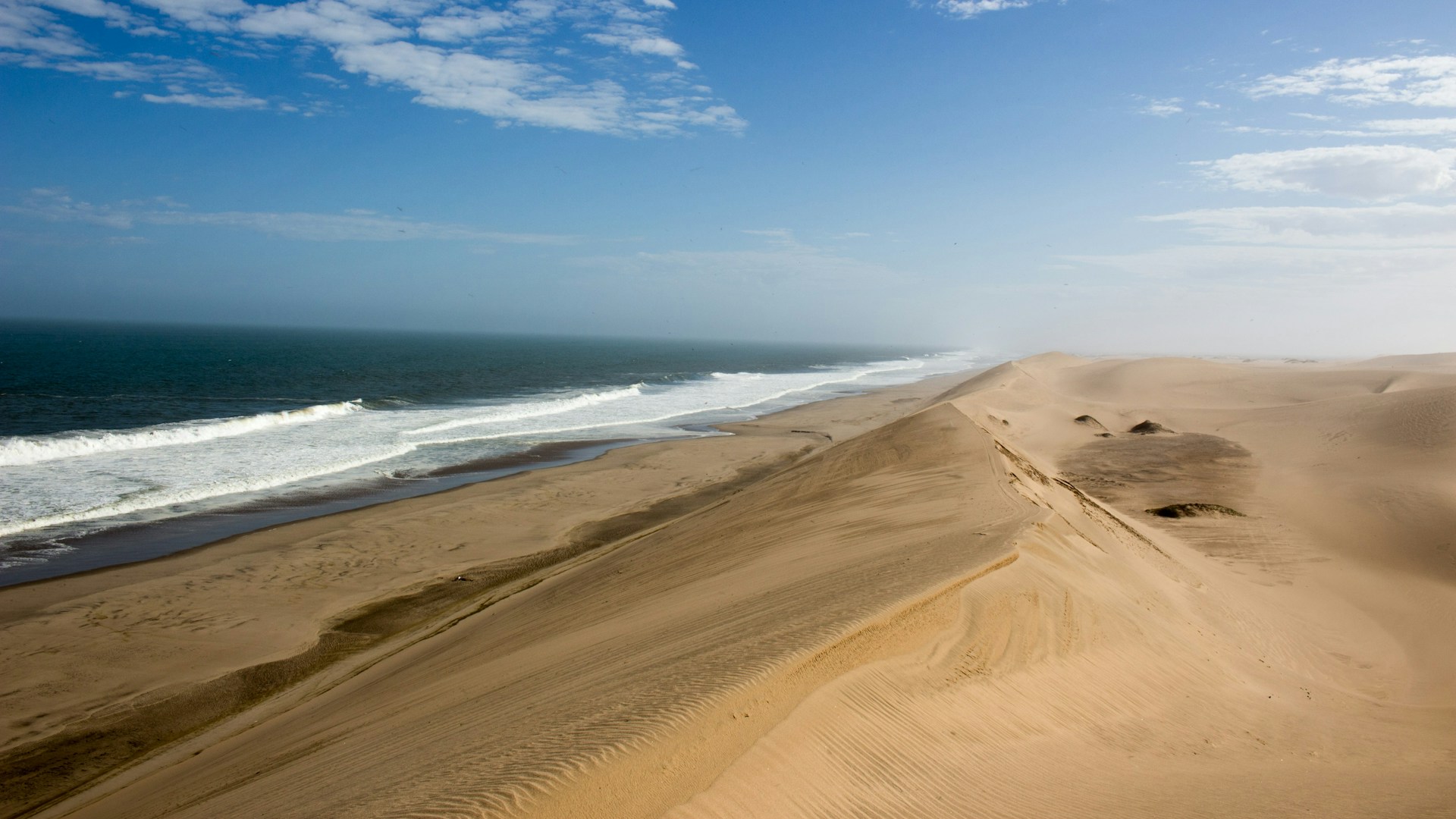
Where the Namib Desert meets the Atlantic, fog replaces rain and geography feels unfinished in the most striking way.
Standing on the coast of Namibia, it takes a moment for your brain to accept what it’s seeing.
Sand dunes stretch endlessly behind you.
Cold Atlantic waves roll in front of you.
And between them, thick fog drifts like something misplaced.
This is one of the rare places on Earth where geography feels unfinished.
A Landscape Built on Contradiction
Deserts aren’t supposed to meet oceans like this.
The Namib Desert is one of the oldest deserts in the world, yet it lives side by side with the Atlantic. Cold currents cool the air, fog feeds the dunes, and almost nothing behaves the way you expect.
It’s not dramatic geography. It’s quiet, confusing geography — the kind that makes you stop talking.
Fog Is the Real Climate Here
Rain is rare. Fog is constant.
Most life along this coast survives not on rainfall, but on moisture pulled directly from the air. Plants, insects, even larger animals adapt to this rhythm. Mornings arrive muted. Visibility comes and goes.
You don’t “visit” this place so much as you wait for it to reveal itself.
Distance Feels Different Here
Roads are long. Towns are few. Silence stretches.
Geography here isn’t about landmarks — it’s about scale. You feel small not because something towers over you, but because nothing interrupts the horizon.
This is geography that explains itself without words.
Why This Place Stays With You
Most destinations impress through abundance.
Namibia’s coast does the opposite.
It shows how climate, ocean currents, and time can shape a place that feels almost untouched — and somehow still alive.
You leave with fewer photos than expected.
But a much clearer sense of how strange and precise the planet really is.

.jpg)